
Advisory Board
The Advisory Board will consist of three distinguished international experts who will provide supervision and strategic guidance through expert recommendations to support the project’s progress. Moreover, it will serve as a platform to strengthen EVERYWHERE’s international visibility and connections.

Dr. Jutta Thielen-del Pozo is a senior scientist specializing in hydro-meteorology. She obtained her MSc in Meteorology from the University of Karlsruhe, Germany (1989), and completed her Ph.D. in Environmental Science at the University of Lancaster, UK (1994), where she studied the influence of hilly terrain on the outbreak of severe rainstorms.
Since then, she has built a distinguished career in high-resolution numerical modelling of severe weather—such as rain, hail, and windstorms—and in integrating meteorological and hydrological models.
From 2003 to 2012, Dr. Thielen-del Pozo served as Project Leader of the European Flood Awareness System (EFAS). Between June 2014 and October (year not specified), she was a member of the Advisory Board for the Hydrological Ensemble Prediction Experiment (HEPEX), an international initiative focused on improving hydrological forecasting. She later led the Weather and Climate-Driven Risks project (2013–2015), served as Acting Head of the Climate Risk Management Unit (2015–2016), and was Head of the Scientific Development Unit from 2016 to 2023.
Since 2014, Dr. Thielen-del Pozo has been Vice Chair of the World Meteorological Organization (WMO) Region VI Working Group on Research, and she currently serves as Advisor for Strategy and Work Programme at the European Commission’s Joint Research Centre (JRC).
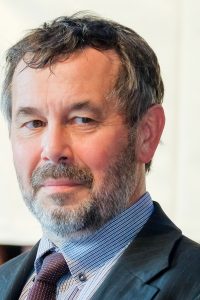
Philippe Quevauviller has been researcher in oceanography in the years 1983-1989 at the University of Bordeaux (France) in cooperation with the Portuguese Environment Ministry in Lisbon (Portugal) and the Dutch Ministry for Public Works in The Hague. He obtained two PhDs (oceanography and environmental chemistry) in 1987 and 1991, and the highest French University degree (HDR) in 1999.
He started his career at the European Commission in 1989 as a scientific officer at DG Research (in charge of QA/QC of environmental analyses), then as a policy officer at DG Environment (in charge of EU water policies) in the years 2002-2008, and back to DG Research from 2008 to 2013 in the area of hydrometeorological hazards. He then moved to the Secure Societies Programme in 2013, firstly at DG Enterprise (2013) then at DG Home (2015), where he has been responsible for research programming in the area of Disaster Resilient Societies (DRS).
From 2014 onward, he coordinated the development of the Community of Users on Secure, Safe and Resilient Societies (now Community for European Research and Innovation for Security, CERIS) and pursued DRS research programming within the Horizon Europe framework programme, with links with various stakeholders (policymakers, first responders, SMEs, research and academic organisations, civil society and public authorities) until his retirement on July 1st, 2024.
Besides his work at the European Commission, he developed an academic career as Associate Professor at the Vrije Universiteit Brussel (VUB) during the years 2007-2019 and invited professor in various universities (Lille, Nice), and as a scientific writer and editor (with more than 250 papers and 20 books published in the international literature).
On a personal touch, he is leading several musical bands and is a music producer. To date (March 2025), he is visiting professor at the Disaster Prevention Research Institute (DPRI) of the Kyoto University for a period of 4 months. He also became member of the AFPCNT (French Association for the Prevention of Natural and Technological Disasters) and the IDRiM (Integrated Disaster Risk Management) Society.

Dr. Matthias Steiner is a Senior Scientist with the NSF National Center for Atmospheric Research (NSF NCAR) serving as Director of the Research Applications Laboratory’s Aviation Applications Program. Drawing from more than three decades of scientific experience, he leads new initiatives and directs research and development efforts broadly aimed at mitigation of avoidable weather and climate impacts on various sectors, with a particular focus on aviation. Dr. Steiner’s vision, leadership, and substantial contributions toward mitigating weather impacts on the aviation industry reach deeply across the traditional boundaries of developing more accurate weather forecasts to integrate weather guidance in the decision-making process to better serve aviation operators.
At present, Dr. Steiner is leading efforts to understand weather sensitivities and requirements for the rapidly growing interests in urban air mobility and using unmanned aerial systems for wide-ranging applications and safe integration into the national airspace system. Dr. Steiner has received multiple recognitions for excellent contributions to field programs, scientific missions, and outstanding publications. Most notable, Dr. Steiner is a Fellow of both the Royal and American Meteorological Societies.